
Roofing Contractor on the Main Line, PA
- Slate, cedar, and shingle repairs matched to the roof
- Repair-first assessments explained before work begins
- Roofing, gutters, and exterior support for older homes
Book Professional Roofing Service Now
Roofing Built for Main Line Homes
Much of the Main Line’s housing stock predates the Second World War, and a large share of it still wears its original slate. That changes what “roofing work” means. A repair on a 1920s slate roof is not a shingle swap, it’s matching slate size, color, and thickness so the fix disappears into the field; it’s copper flashing and valleys worked to the roof’s original detailing; it’s knowing which slates can carry another fifty years and which have quietly reached the end.
It also changes what bad work looks like. The most common damage on older Main Line roofs isn’t storm damage, it’s previous repairs done with the wrong materials. Asphalt cement smeared over slate, modern sealants on copper, incompatible fasteners: patches like these trap moisture, accelerate deterioration, and cost far more to undo than the original repair would have cost to do right. Historic roofing specialists warn against exactly this pattern, and undoing it correctly is exactly the kind of work we take on.
Whether your home is a registered historic property, a mid-century colonial, or new construction built to fit the neighborhood, we match the method to the roof, never the other way around.
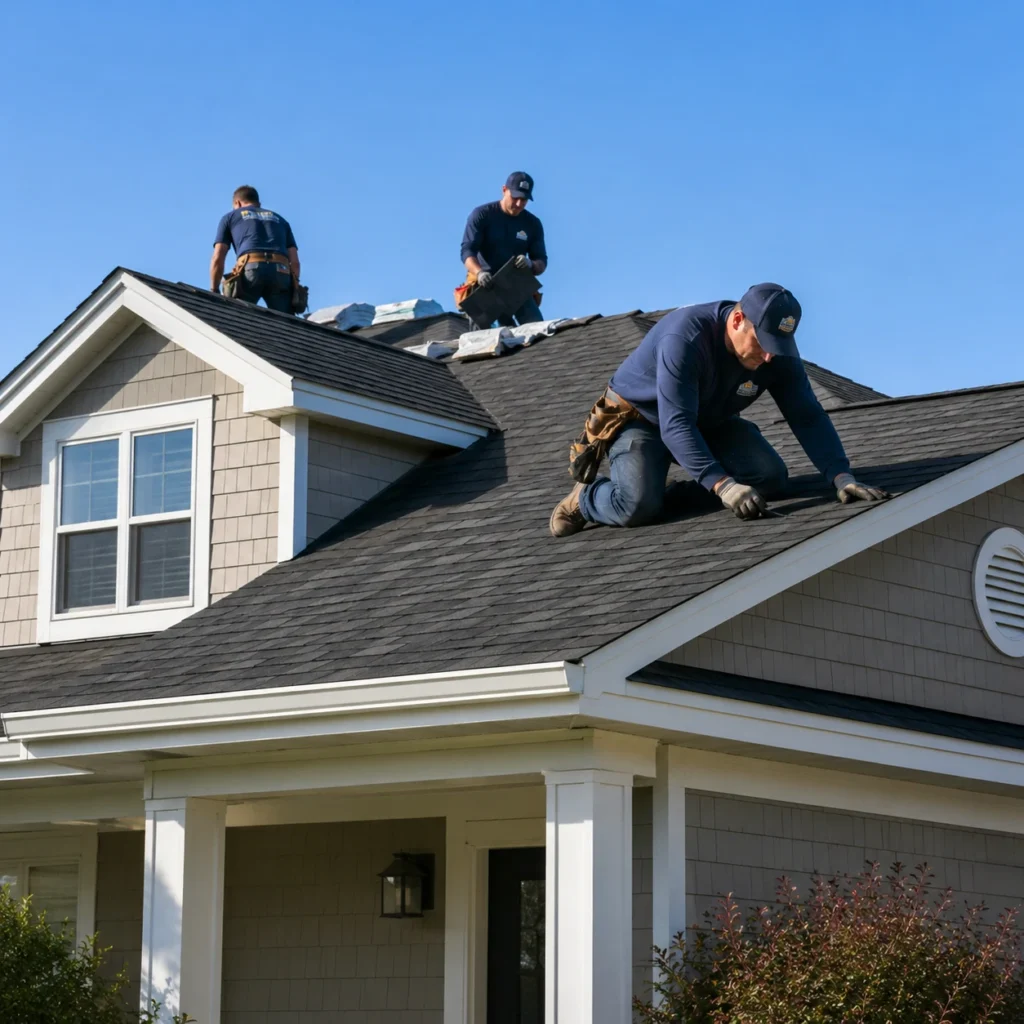
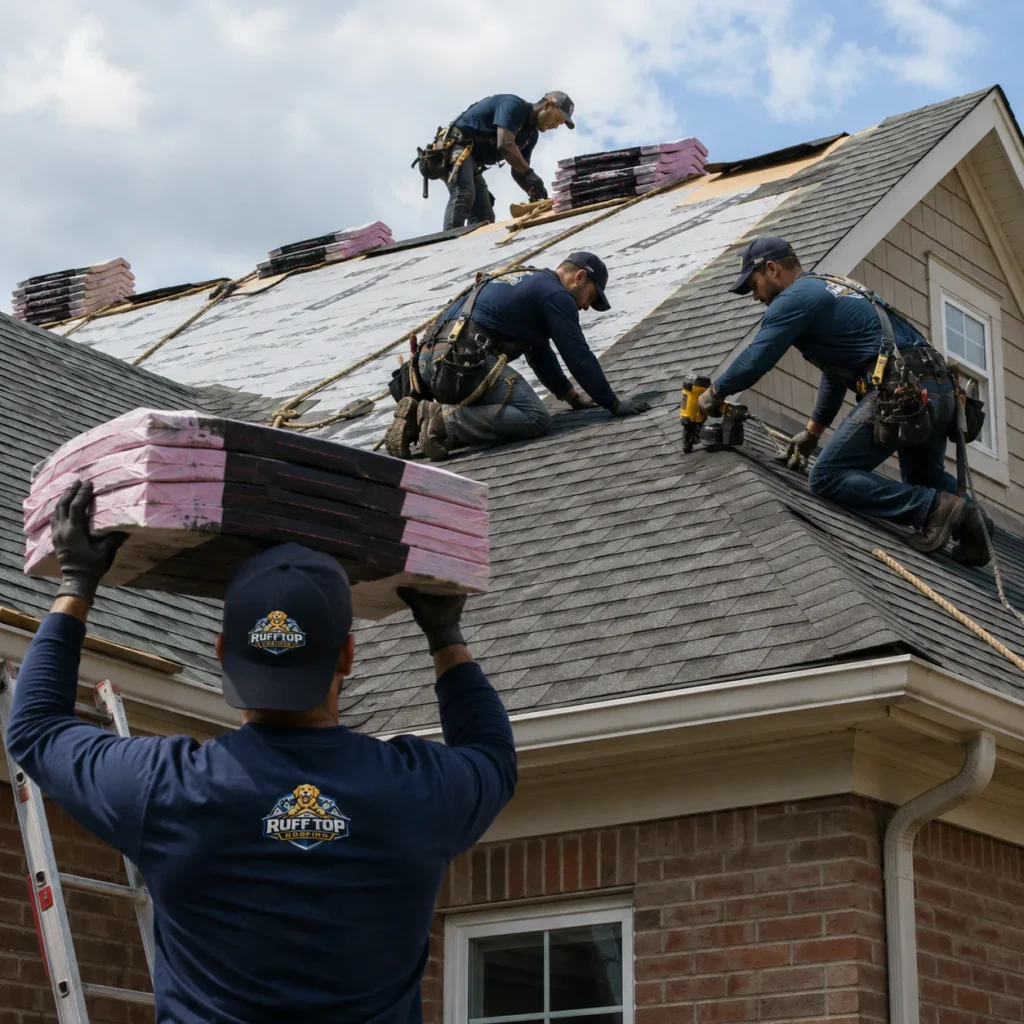
Our Roofing Services on the Main Line
Roof repair. From slipped and cracked slates to failed flashing, chimney leaks, and storm-loosened shingles, we diagnose the actual source of a leak, which on older roofs is rarely where the water shows up inside, and repair it with materials compatible with what’s already on the roof.
Slate and historic roof restoration. Targeted slate replacement, copper and flashing work, ridge repair, and full restoration planning for older and historic homes. Where the roof qualifies for preservation-minded treatment, we follow the repair-first approach that the National Park Service recommends for historic slate.
- Ceiling stains after rain
- Slipped or cracked slates
- Gutters spilling over near the roofline
- Shingle grit near downspouts
- Flashing gaps at chimneys or valleys
- Damp attic framing
- Worn sections over porches or additions
- Loose copper or fascia at the roof edge
Maintenance and inspections. The cheapest repair is the one a routine inspection catches early. We offer scheduled inspections suited to older roofs, where small, early fixes are the difference between decades more service and premature replacement.
REPLACEMENT PLANNING WITHOUT THE PRESSURE
Roof replacement. When a roof truly is at the end of its life, we replace it, in kind where the home calls for it, or with modern architectural materials where that’s the right fit and budget. Every replacement starts with an honest assessment of whether you need one at all.
Replacement enters the conversation when you notice:
- Leaks that return after repeated repairs
- Slates spalling or shedding across slopes
- Brittle or curling shingles across the field
- Soft or sagging decking
- Patches layered on the same sections
- Water damage in more than one room
- Storm damage across multiple slopes
For replacement projects, Ruff Top Roofing walks you through the full scope before work starts, materials in kind or modern alternatives, underlayment, flashing, ventilation, cleanup, and timing.
What Your Slate Roof Is Actually Worth
Here’s the number that should change how you think about that aging slate roof: according to the National Park Service’s Preservation Brief 29 on historic slate roofs, a properly installed slate roof lasts 60 to 125 years or longer depending on the slate, and some slates have been known to last more than 200 years. Vermont and New York slates run about 125 years; Buckingham Virginia slate can exceed 175.
That lifespan is the reason the NPS’s guidance is blunt: historic slate roofs should be repaired rather than replaced whenever possible. A Main Line homeowner who lets a contractor talk them out of a repairable slate roof isn’t just losing architectural character, they’re throwing away decades of remaining service life that no asphalt shingle will ever match.
The catch is that slate rewards expertise and punishes shortcuts. Slate breaks under foot traffic, so every unnecessary trip across the roof by an untrained crew creates the next repair. Matching replacement slate takes sourcing knowledge, not a trip to the supply house. And the difference between a roof with 60 years left and a roof that’s finished is often invisible from the ground. That’s why the first thing we bring to a Main Line slate roof isn’t a ladder, it’s an honest assessment.
STORM DAMAGE AND WEATHER WEAR ON THE MAIN LINE
Storm damage response. Wind, hail, and fallen limbs don’t schedule appointments. We provide storm damage assessment, emergency protection, and repair, and we document the damage properly so your insurance claim reflects what actually happened to your roof.
Safe things to check from the ground: slates or shingles in the yard, loose copper or flashing at the edges, limbs resting on the roof, new interior stains, and gutters suddenly overflowing.
If anything looks different after a storm, a prompt inspection with proper photo documentation for your insurer catches it early.
Where We Work on the Main Line
We serve homeowners across the Main Line corridor, including Ardmore, Bala Cynwyd, Narberth, Wynnewood, and Gladwyne, along with the surrounding Lower Merion communities. Each of these towns has its own character, and its own roofing patterns. Narberth’s tight borough streets are lined with early-1900s twins and singles; Gladwyne’s estate properties carry some of the region’s most valuable slate and cedar roofs; Bala Cynwyd mixes prewar homes with commercial roofing needs along City Avenue. Wherever you are on the Line, you’re getting the same crew, the same standards, and the same straight answers.
When one part fails, the trouble travels.
Clogged gutters push water back under slates and shingles. Failed siding lets moisture behind the wall. Loose flashing can make a roof leak masquerade as a window or chimney problem.
Ruff Top Roofing reads the whole exterior so the recommendation fits the actual problem.
ROOFING OPTIONS FOR MAIN LINE HOMES AND ESTATES
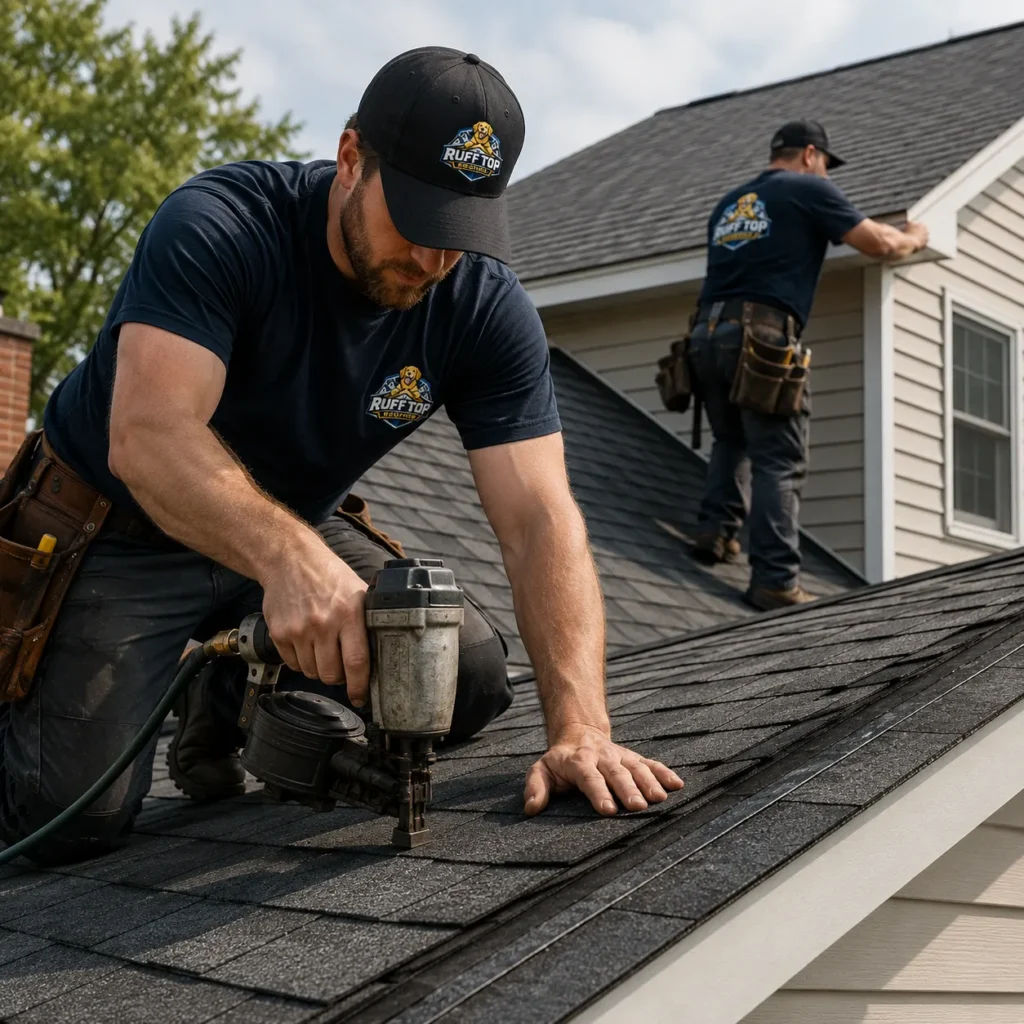
Roofing needs vary widely across the Main Line. Some homes need a straightforward shingle repair. Others carry original slate, cedar shake, low-slope additions, dormers, or copper detailing that call for a very different approach.
Depending on the property, the work may involve slate repair and matching, cedar shake, architectural shingles, flat or low-slope sections, copper and metal details, flashing upgrades, gutters, or commercial roofing.
The right option fits the roof design, the condition of its materials, and your plans for the property.
COMMERCIAL ROOFING SUPPORT ON THE MAIN LINE
Most calls come from homeowners, but Ruff Top Roofing also supports Main Line businesses and property managers with commercial roofing concerns.
Commercial roofs bring flat sections, seams, drainage points, rooftop equipment, and access considerations that behave differently from a pitched residential roof.
We help with inspections, repairs, replacement planning, and roofline issues for storefronts, offices, mixed-use buildings, and managed properties along the corridor.
What to Expect
It starts with an inspection and a conversation. We look at the whole roof system, slates or shingles, flashing, valleys, ridges, gutters, and the attic side where problems show first, and we tell you what we found in plain language, with photos. You get a written scope and price. If it’s a repair, we schedule it promptly and protect the surrounding roof while we work; foot traffic discipline matters on slate, and our crews are trained for it. If it’s a replacement, we plan it around your home, your material choice, and your timeline. Either way, the site is cleaned, the work is documented, and you know exactly what was done.
During the inspection we review the roof surface, slates or shingles, flashing, valleys, ridges, roof edges, gutters, downspouts, siding connections, and the attic side where problems show first.
Then we explain what we found in plain language. You will know whether the problem is repairable, whether replacement belongs in the conversation, and what should be handled first.
WHY MAIN LINE ROOFS NEED CAREFUL ATTENTION
The Main Line mixes prewar stone colonials, Tudors, estate properties, borough twins, additions, and mature tree cover, details that all shape how a roof ages and where it fails.
A quick look from the driveway misses the real story.
Original flashing, shaded slopes that hold moisture, tree debris, aging box gutters, and low-slope porch roofs all create slow-moving water problems. A careful inspection connects those details before the plan is made.
Why Main Line Homeowners Choose Ruff Top
Straight assessments, not sales pitches. If your roof needs a $600 repair, we won’t quote you a replacement. The repair-first standard isn’t just for historic slate, it’s how we approach every roof.
Materials matched to the home. Slate, cedar, copper, architectural shingle, the right material for the roof you have and the neighborhood it sits in.
Documentation you can use, from a local crew. Photo-documented assessments and clear written scopes, for your records, an insurance claim, or a pre-sale file, from a locally owned team based in the Collegeville area that answers the phone.
Our clients say it all
Don’t just take our word for it

Exceptional craftsmanship and professionalism. They provided a clear estimate and finished our Collegeville roof on schedule. Highly recommend for any local homeowner…

Ruff Top responded fast after the storm and fixed our leak with total integrity. No upselling—just honest, quality work when we needed it most…

Stunning results on our complex shingle installation. Their commitment to the ‘Gold Standard’ shows in every detail. A truly premium experience from start to finish…
We’ve got answers
How long do slate roofs on the Main Line last?
Far longer than most homeowners assume. The National Park Service’s Preservation Brief 29 puts a properly installed slate roof at 60 to 125 years or longer depending on the slate type, and notes that some slates have lasted more than 200 years. Many original slate roofs on prewar Main Line homes still have decades of service left, if they’re maintained and repaired correctly.
Should I repair my slate roof or replace it?
Repair first, whenever possible, that’s the National Park Service’s standing guidance for historic slate roofs, and it’s ours. Replacement enters the conversation when deterioration is widespread rather than localized; industry guidance commonly treats damage across roughly a third of the roof as the point where full replacement becomes more economical than continued repairs. An honest inspection tells you which side of that line your roof is on.
Is it safe to walk on a slate roof?
No, and this matters more than most homeowners realize. Slate breaks under foot traffic; preservation guidance specifically identifies homeowners and untrained tradespeople walking on slates as a common cause of breakage. If a contractor tramps across your slate roof without staging or padding, they’re creating your next repair. Keep off the roof and leave inspections to crews trained for slate.
Can asphalt patches or roofing sealant damage an older roof?
Yes. Asphalt cement, modern sealants, and incompatible fasteners are among the most common problems historic roofing specialists find on older roofs, they trap moisture against slate and metal, accelerate deterioration, and make proper repair harder and more expensive later. A temporary patch has its place in an emergency, but it is not a repair, and the wrong patch is worse than none.
How often should an older roof be inspected?
Preservation guidance for slate roofs recommends a professional inspection every three to five years, with prompt attention to any missing or slipped slate in between, a single missing slate exposes the joint beneath it and lets water into the roof structure. On the Main Line’s older housing stock, that inspection cadence is the cheapest insurance a homeowner can buy.